15 Motorcycle Hand Signals for Group Riding Safety
Sep 15, 2025
Tags:rentersownersguide
You’re riding in a group, just a few bikes behind the lead, when the person in front of you lifts their arm and signals a turn. No one needs to ask questions or second-guess what’s happening because everyone already knows what that gesture means. The group shifts together, the pace stays steady, and the ride keeps flowing without a single word. That kind of coordination only works when everyone understands the nonverbal ways riders look out for each other. In this guide, we’ll walk through the most common motorcycle hand signals you should know and how to use them.
Are You Supposed to Use Hand Signals on a Motorcycle?
Yes, you're supposed to use hand signals if your turn signals aren’t working or if your bike doesn’t have them. In most states, it's part of the law, not just a helpful tip. Even when your lights are working, hand signals help everyone stay in sync during a group ride. They give the riders behind you a heads-up so no one’s surprised by a sudden stop or turn, and they make it easier for the whole group to keep moving together without confusing anyone in the process.
Safety Disclaimer: Hand signals can help with communication, but they’re never a replacement for good judgment or following the rules of the road. Always obey traffic laws, use your mirrors, and make sure your intentions are clear to both riders and drivers around you. A signal can help others know what you’re doing, but it won’t make up for risky decisions or riding without awareness.
Biker Signals We’ll Cover Below:
- Motorcycle hand signals for turns and direction
- Hand signals for slowing down and stopping
- Hazard and warning hand signals
- Group riding hand signals
Motorcycle Hand Signals for Turns and Direction
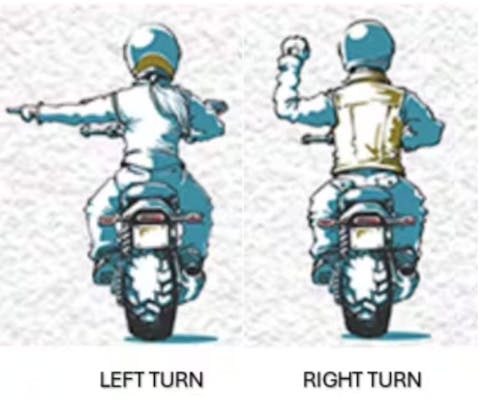
1. Left Turn: Extend your left arm straight out to your side. Keep it flat and level with your shoulder, and turn your palm so it’s facing down.
2. Right Turn: Raise your left arm at a 90-degree angle so your forearm is pointing straight up and your hand is in a fist. Since the left hand is used for signaling, this is the go-to way to indicate a right turn.
Hand Signals for Slowing Down and Stopping
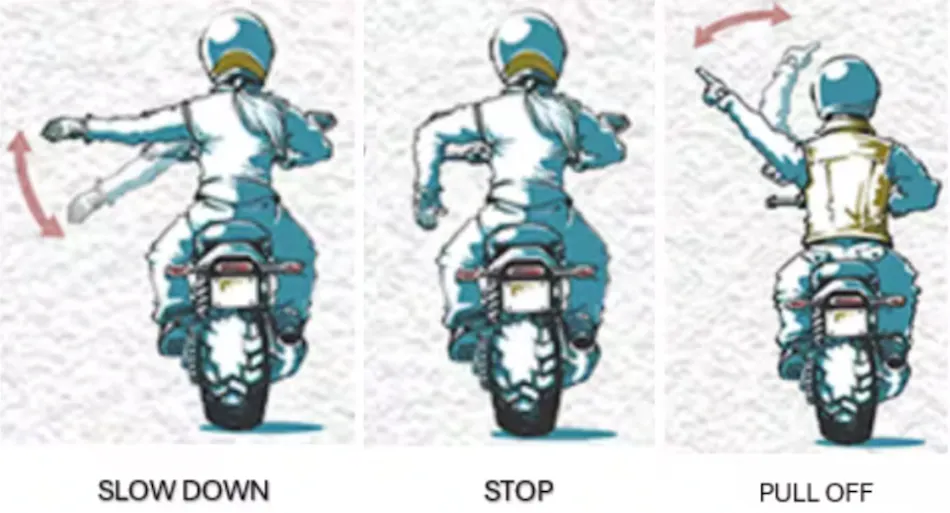
3. Slow Down: Stick your left arm out to the side, then angle it downward toward the ground. Move your hand up and down a few times in a steady, pressing motion.
4. Stop: Hold your left arm straight out from your body, then bend it downward at a 90-degree angle. Keep your hand open with your palm facing backward so it’s visible to the riders behind you.
5. Pull Off/Exit: Lift your left arm slightly above shoulder height and make a small circular motion with your index finger. Keep the motion controlled and easy to see.
Hazard and Warning Hand Signals
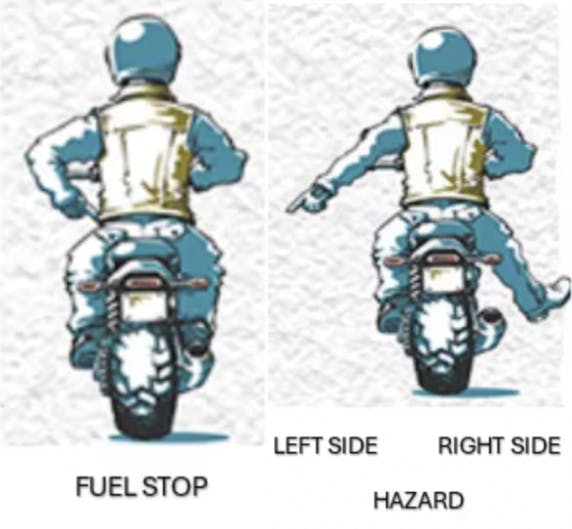
6. Road Hazard Left: Extend your left arm down and point directly toward the hazard. This could be anything from gravel to a pothole. The quick motion helps the riders behind you avoid it without delay.
7. Road Hazard Right: Use your right foot to point at the hazard on the right side of your bike. Since your right hand needs to stay on the throttle, using your foot gives a clear signal while keeping you in control.
8. Fuel Stop/Gas: Use your left hand to point at or tap the gas tank on your motorcycle. If your tank is out of reach, gesture clearly toward that area.
9. Debris or Obstacle in Road: (from reddit: In my riding group, the accepted practice is to point at it with the foot on that side with multiple "points" to show it's not just you stretching your leg.)
(Bonus) Police Ahead: Tap the top of your helmet with the palm of your left hand. Do it two or three times in a row to make sure it’s noticed. Riders should always be driving safely, but it never hurts to be a little more cautious when you know a cop is up ahead.
Group Riding Hand Signals
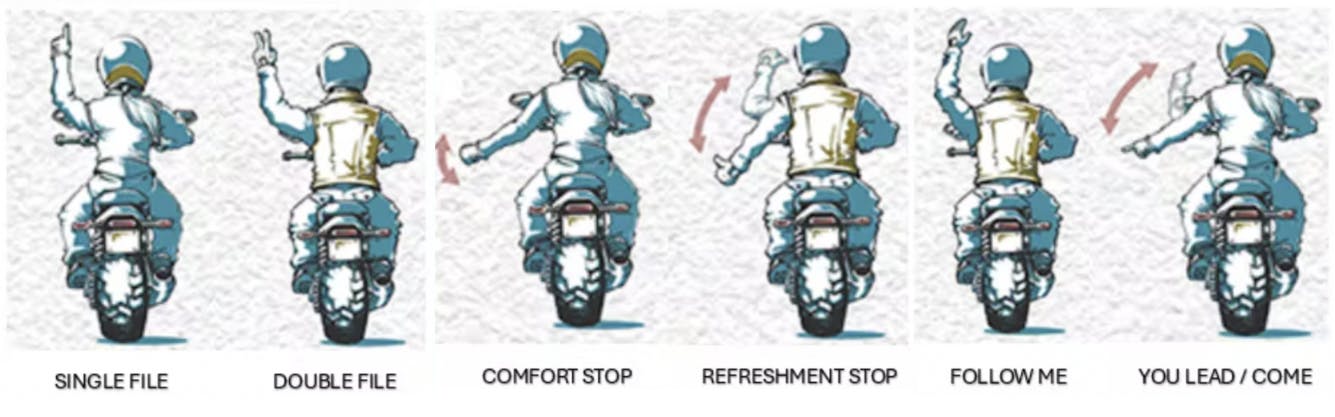
10. Single File: Raise your left hand above your shoulder and hold up one finger. Keep your arm high enough for the riders behind you to see it clearly.
11. Double File: Lift your left hand and hold up two fingers (index and middle). Make sure your hand is above shoulder level so it’s easy to spot from farther back in the group.
12. Comfort Stop/Break: Make a closed fist with your left hand and stick your thumb out, then point the thumb toward your mouth to let others know you’d like to stop for a drink. For a more general break, you’ll need to stick your left hand out, clench your fist, and move it up and down in short, quick motions.
13. Follow Me: Raise your left arm straight up into the air and hold it there. Keep your fingers extended so the gesture is easy to read.
14. You Lead/Come to Front: When you want someone else to take the lead, extend your left arm downward, pointing forward, then sweep it in a leading motion.
15. Turn Signal On: Point toward the turn signal on the side of the rider’s bike, then open and close your hand repeatedly. This tells them their signal is still blinking.
Biker Hand Signals & Group Riding FAQ
There’s a lot to take in when it comes to group riding, and it’s normal to have a few more questions. Here’s a quick breakdown to help things make more sense.
What does it mean when bikers point two fingers down?
This gesture, commonly called the "biker wave," signifies peace and acknowledgment among bikers. It's performed by extending the left arm and pointing two fingers towards the ground, symbolizing "keep two wheels on the ground." Riders use this gesture to express mutual respect for each other's safety.
Do all riders use the same motorcycle hand signals?
Most riders use the same basic hand signals, especially in group settings, but there can be small variations depending on where you're riding or who you’re with. Some groups might have their own way of signaling certain things, like a rest stop or a road hazard, which is why it helps to do a quick run-through with your group before the ride starts. As long as everyone agrees on what each signal means, you’ll be in good shape.
Should the lead rider always be the one giving signals?
The lead rider usually takes the lead on signaling, but that doesn’t mean they’re the only one who should be doing it. If you’re farther back in the group and see something the lead rider might not notice, like debris or a car merging in, it’s okay to pass that signal along. Group rides work best when everyone stays alert and communicates, not just the person in front.
Ride Safer With Riders Share
Group riding works best when everyone is in sync, and that starts with being on a bike you feel good about. Riders Share gives you the freedom to rent motorcycles that handle well in formation, respond smoothly to quick stops or lane changes, and keep you comfortable for the entire ride. You can choose from popular brands like Harley-Davidson, Indian, BMW, Honda, and more. Whatever the route or distance, you’ll feel more prepared when you’re on something that fits the rhythm of the group. Take a look at what motorcycle rentals are available near you and choose a bike that makes the whole experience feel smoother from the start!

See How Group Communication Works on a Guided Motorcycle Tour
Want to get a feel for hand signals in action? Join a guided ride led by one of our local hosts and see how group communication works in real time. It’s a relaxed way to learn, ride, and enjoy the road without having to figure it all out on your own. You can browse available tours in your area and find one that matches your pace and experience level.

Before You Go
Getting comfortable with hand signals takes a little practice, but once you’ve used them a few times, they start to feel like second nature. The more you ride with others, the more you’ll see how much they help keep things organized and safe. Whether you're heading out with friends or joining a new group for the first time, a little communication goes a long way in making the ride more enjoyable for everyone.
Related Articles
Mon - Fri: 8-8 CT
Weekends: 9-8 CT
